
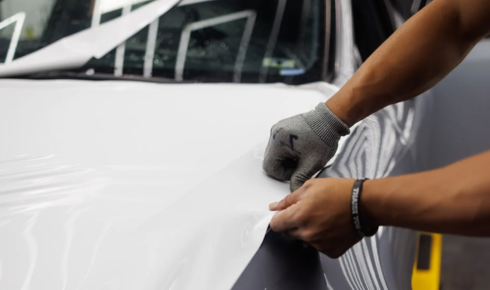
A vehicle wrap can look simple from the outside. Pick a colour, print a design, apply it to the car or van, and there it is. But anyone who works with wraps knows there’s a lot happening under the surface. The material choice affects how the wrap fits, how long it lasts, how clean it looks, and whether it still feels professional after months of sun, rain, washing, and road dust.
For a business, that matters. A wrapped vehicle is not just a design project. It becomes part of the company’s public image. It parks outside homes, drives through local streets, waits at job sites, and quietly tells people whether the brand looks organised and trustworthy. Good film helps that impression stay strong.
Why Cast Vinyl Is Often Used for Vehicles
Professional wrap installers often prefer cast vinyl materials for full vehicle wraps because they are made to handle complex shapes. Vehicles are full of curves, seams, mirrors, bumpers, recessed areas, and wheel arches. A film that cannot stretch and settle properly may start lifting, shrinking, or wrinkling in those difficult areas.
Cast vinyl is usually thinner and more flexible than basic vinyl options. That makes it easier to apply smoothly across rounded panels and tight edges. It also tends to perform better outdoors, especially when paired with the right laminate and installed by someone who knows what they’re doing.
When Calendared Vinyl Makes Sense
Not every project needs the same material. Calendared vinyl can be a practical choice for flatter surfaces, short-term graphics, simple lettering, signs, window decals, and temporary promotions. It is generally thicker and less conformable than cast vinyl, but it can still work well when used in the right situation.
The problem begins when the wrong film is used for the wrong job. A material designed for flat surfaces may struggle on deep curves or recessed panels. It might look fine at first, then slowly pull back as the vehicle heats, cools, and moves through daily conditions. So the choice is not about one material being “bad.” It is about matching the film to the purpose.
Specialty Options Add Personality
For owners and businesses that want something beyond standard colour or printed graphics, specialty films open up a whole different range of possibilities. These may include carbon fiber textures, brushed metal looks, chrome effects, matte finishes, satin colours, metallic tones, reflective films, or colour-shifting options.
Specialty films can make a vehicle stand out quickly, but they need careful planning. Some finishes require more maintenance. Some may show scratches or fingerprints more easily. Others may be harder to install around complex curves. A dramatic finish can look amazing, but it should still suit the vehicle and the way it will be used.
Design Still Needs to Stay Practical
Material choice matters, but design cannot be ignored. A wrap should be easy to understand in the real world. People often see vehicle graphics while driving, walking past, or sitting at a traffic light. They do not have time to read tiny text or decode a cluttered layout.
For business wraps, simple usually works better. A clear logo, service description, phone number, and website can do more than a crowded list of every service offered. Strong contrast helps too. If the text disappears into the background colour, even the best material will not save the design.
Installation Turns Film into a Finished Look
Good installation is where the material’s quality becomes visible. The vehicle must be cleaned properly, measured carefully, and wrapped with patience. Handles, curves, panel gaps, and edges all need attention. If the vinyl is overstretched or trimmed poorly, problems may appear later.
Experienced installers understand how different films behave. Cast film, calendared film, and textured films all respond differently to heat and pressure. That knowledge helps create a smoother result and reduces the risk of bubbling, lifting, or early failure.
Maintenance Helps Protect the Wrap
Even high-quality wrap materials need basic care. Gentle washing removes dirt, road grime, bird droppings, and pollutants before they damage the surface. Harsh chemicals, abrasive brushes, and pressure washing too close to the edges can shorten the life of the wrap.
Different finishes may need different care, too. Matte and satin films should not be polished like gloss paint. Textured films may collect dust in small grooves. Knowing how to clean the wrap properly helps it stay sharp for longer.
The Best Choice Depends on the Real Goal
There is no one perfect vinyl for every job. A full commercial vehicle wrap may need a premium cast film. A temporary window promotion may be fine with a simpler material. A personal custom project may call for a specialty finish that adds texture or movement.
In the end, the right film is the one that fits the vehicle, the design, the budget, and the expected lifespan. When material, design, installation, and maintenance all line up, a vehicle wrap becomes more than a surface change. It becomes a durable, professional, and memorable part of the brand.