
Ice looks simple, but the water behind it isn’t always simple at all. In a busy restaurant, café, hotel, or catering business, an ice machine can run for hours every day, turning large quantities of incoming water into something customers consume directly. That makes water quality more important than many business owners realize.
When ice starts looking cloudy, tasting unusual, or appearing different from normal, the machine itself isn’t always the culprit. Water chemistry, filtration, cleaning, and freezing conditions can all play a part. Understanding these factors makes it much easier to decide when treatment is needed and when a machine simply needs routine maintenance.
Why the Incoming Water Matters
Every ice cube begins with the water entering the machine. If that water contains dissolved minerals, organic compounds, sediment, disinfectants, or other substances, some of those characteristics can influence the finished ice.
Municipal water is generally treated before reaching a property, but treatment doesn’t mean every source has identical chemistry. Local geology, distribution pipes, seasonal changes, and building plumbing can all influence what reaches the ice machine.
For commercial operators, the sensible approach is to understand the water before assuming a particular filtration system is necessary.
Understanding TDS and Organics
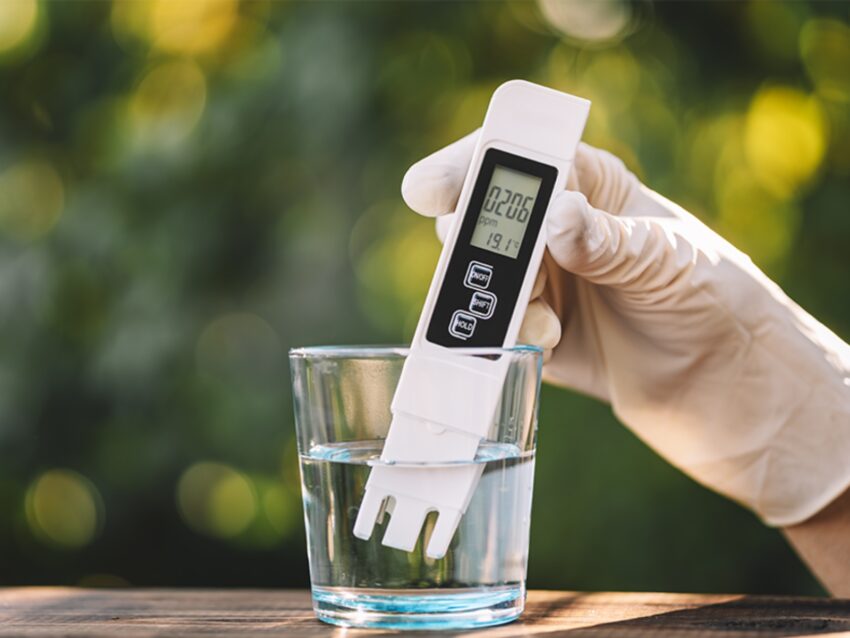
Two areas that can be useful when evaluating water are tds and organics. TDS, or total dissolved solids, refers broadly to dissolved substances present in water. These may include minerals and salts, among other dissolved materials.
Organic compounds are a different category and can come from various natural or environmental sources. Their presence and significance depend heavily on the water source and specific testing results.
A TDS reading by itself doesn’t tell you exactly what substances are present. That’s an important point. A high reading doesn’t automatically mean the water is unsafe, nor does a low reading guarantee that every water-quality concern has disappeared.
Testing different characteristics together gives a much more useful picture.
How Dissolved Substances Can Affect Ice
When water freezes, dissolved substances don’t necessarily disappear. Their behavior during freezing can influence the appearance and characteristics of the resulting ice.
Some commercial ice machines are designed to manage water quality through specific freezing and harvesting processes. Still, unusually high mineral content or other water characteristics may contribute to deposits, taste concerns, or changes in appearance.
This is one reason filtration can be valuable. The goal isn’t to remove every dissolved substance simply because it exists. Instead, businesses should focus on characteristics that actually affect their equipment or finished product.
Freezing Is More Important Than It Looks
The freezing process itself can influence how ice looks. As water freezes, dissolved substances and gases may behave differently within the forming ice. Air bubbles, impurities, and the speed of freezing can contribute to differences in clarity.
That’s why two ice machines using water from similar sources may not always produce identical-looking cubes.
Cloudy ice isn’t automatically evidence of contaminated or unsafe water. It can result from the way the machine freezes water, the design of the equipment, or normal differences in ice formation.
If appearance changes suddenly, however, it makes sense to investigate both the machine and the water supply rather than immediately blaming one or the other.
What Organics Can Mean for Taste and Odor
Certain organic compounds can influence taste or odor even when they aren’t visible. For businesses that serve beverages, this can become noticeable because ice comes into direct contact with drinks.
A customer may not know why a beverage tastes slightly different. They simply know something seems off.
Carbon filtration is commonly considered for certain taste and odor concerns because it can reduce some organic compounds and other substances. But filtration performance varies, so businesses should select equipment based on actual water conditions and manufacturer specifications.
Testing provides the information needed to make that decision sensibly.
Why Clarity Isn’t the Whole Story
When people look at ice, they often focus immediately on appearance. Clarity can certainly be useful as an observation, but it doesn’t tell the entire story about water quality.
Clear water can still contain dissolved substances that aren’t visible. Likewise, cloudy ice isn’t necessarily unsafe. The appearance may be related to freezing patterns, trapped air, minerals, or machine operation.
For that reason, visual inspection should be treated as one clue rather than a complete water-quality test.
Businesses should consider taste, odor, machine performance, maintenance history, and laboratory or professional water-testing results together.
Filtration Should Match the Actual Problem
There is no single filter that solves every commercial water issue. A sediment filter is designed for suspended particles, while carbon filtration may address certain chlorine, taste, odor, and organic concerns. Other treatment technologies may be more appropriate for hardness or specific dissolved substances.
Choosing equipment based only on a general claim like “improves water quality” isn’t enough.
The filter should also be sized for the ice machine’s flow rate and daily water demand. A system that can’t handle the required volume may become a bottleneck, while an unnecessarily large system can increase purchase and maintenance costs.
Maintenance Still Matters
Even excellent filtration cannot replace proper ice machine maintenance. Commercial machines should be cleaned and sanitized according to manufacturer recommendations and applicable food-safety requirements.
Filters also need regular replacement. As a filter reaches its capacity, its performance can change, and delaying replacement defeats much of the reason for installing filtration in the first place.
Keeping a simple record of filter changes, cleaning dates, and unusual observations can make maintenance much easier for staff.
Testing Before Making a Major Investment
Water testing can provide a useful starting point before purchasing treatment equipment. Depending on the situation, testing may examine TDS, hardness, pH, disinfectants, sediment, organic compounds, and other characteristics.
The purpose isn’t to make the water “perfect.” It’s to understand what is actually present and determine whether treatment is worthwhile.
For a busy commercial operation, that can prevent unnecessary spending and help identify the equipment that genuinely fits the application.
A Practical Approach to Better Ice
Good commercial ice production is really a combination of several things: suitable water, appropriate filtration, properly maintained equipment, and consistent cleaning.
TDS and organic content can provide useful information, while freezing conditions help explain differences in ice appearance. Visual clarity can offer clues, but it shouldn’t be treated as the final measure of water quality.
The smartest approach is fairly straightforward. Test when there’s a reason to investigate, understand the results, choose treatment based on actual needs, and maintain the ice machine consistently.
Ice may be a small part of a customer’s drink, but in a busy business, small details matter. Clean-tasting, dependable ice is one of those details that should quietly work in the background — without becoming another problem for the staff to worry about.